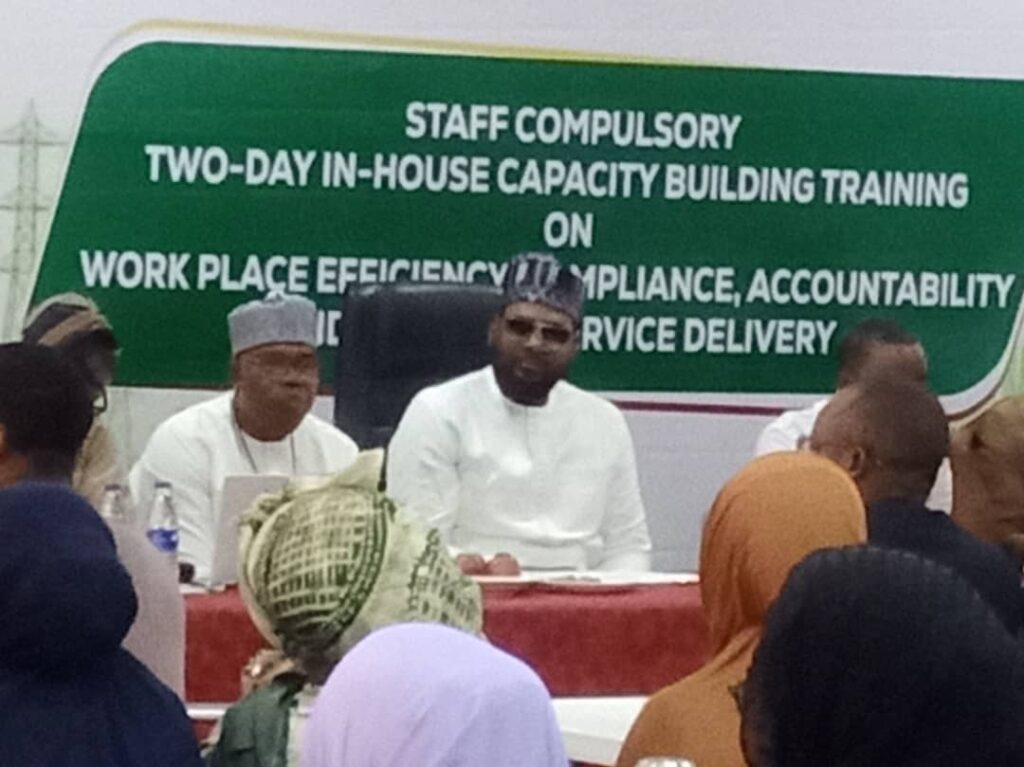
The Energy Commission of Nigeria (ECN) has begun a compulsory training programme for more than 1,000 employees to strengthen accountability, improve workplace efficiency and accelerate the delivery of the Federal Government’s energy policies, including its renewable energy and solarisation initiatives.
The exercise, which brings together staff from the Commission’s headquarters and research centres, is aimed at building a more competent and results-driven workforce capable of translating Nigeria’s energy development policies into tangible outcomes.
Speaking at the opening ceremony in Abuja, the Director-General of ECN, Dr Mustapha Abdullahi, said the programme was designed to reposition the Commission for improved performance and more effective discharge of its statutory responsibilities.
Abdullahi described the exercise as a milestone in the Commission’s institutional development, noting that it was the first time more than 1,000 staff members had been assembled for a unified capacity-building programme.
He said the initiative fulfilled a commitment he made upon assuming office in October 2023, adding that the Commission’s effectiveness in energy planning, policy coordination and development of the nation’s energy resources depended largely on the competence of its workforce.
According to him, the training would equip employees with the administrative, professional and technical skills required to improve service delivery and support the country’s energy security objectives.
He specifically linked the exercise to the Federal Government’s renewable energy agenda, including the national solarisation programme, stressing that effective implementation of energy policies required a workforce with the necessary knowledge and professional capacity.
The Director-General said the Commission remained committed to developing energy policies and master plans that would support the government’s development priorities and expand access to reliable and affordable energy.
He disclosed that the management was considering making the training a regular exercise, possibly quarterly or twice yearly, depending on available resources and operational requirements.
Abdullahi said previous training programmes had been organised for staff in separate groups, but the ongoing exercise was different because it brought together more than 1,000 personnel across the Commission.
He also commended President Bola Tinubu and the Minister of Innovation, Science and Technology for their support, particularly in strengthening the Commission’s financial capacity.
He said the increased government support had placed greater responsibility on the Commission to demonstrate measurable results and justify the confidence reposed in it.
In a separate interview, the Director of Legal Services, Elama Abdulazeez, said the training would deepen staff understanding of the Commission’s enabling law, statutory obligations and the legal framework governing its operations.
He disclosed that the opening phase was designed as a two-day general training covering finance, procurement, stores and general administration, while subsequent sessions would focus on specialised areas, including engineering and research.
Abdulazeez said the programme was structured to make professional development a continuous process, adding that periodic follow-up training sessions were being planned to sustain the gains.
On the Federal Government’s solarisation programme, he explained that the initiative would provide alternative electricity sources to selected public institutions, particularly tertiary institutions and healthcare facilities, thereby reducing their electricity bills and operating costs.
He added that shifting beneficiary institutions to solar power would free up electricity previously consumed by them for distribution to other areas facing inadequate supply.
According to him, the intervention would improve electricity access, reduce the financial burden on public institutions and promote more efficient utilisation of available power resources.
The Commission said the training would strengthen its capacity to coordinate national energy policies, drive energy planning and promote the sustainable development of Nigeria’s energy resources.